
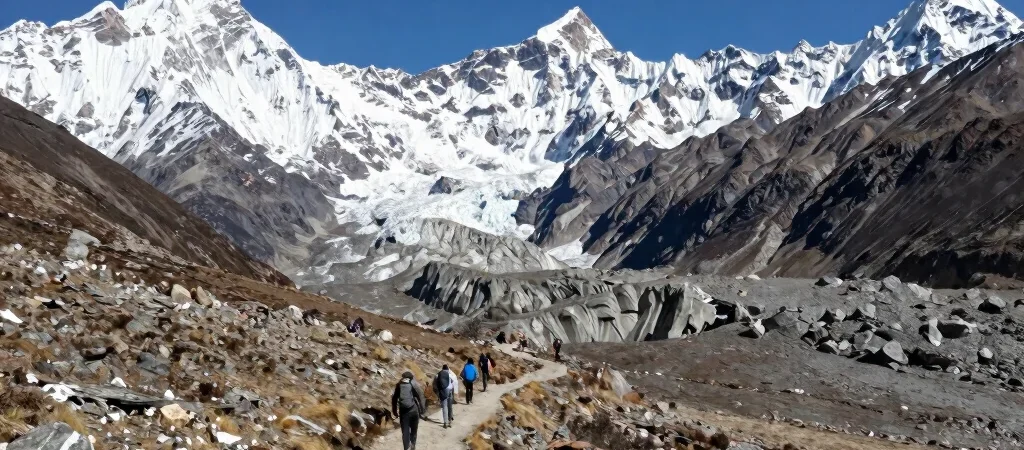
On the Everest Base Camp trail, a line on the map can make a day’s walk look deceptively simple. The route passes through places such as Namche Bazaar and Dingboche before reaching the high settlements near Gorak Shep, and altitude changes the feel of each stage. Plan around how the journey unfolds, not just how many miles fit on a page.
Build in time to adjust
Many itineraries include acclimatization days around Namche Bazaar and Dingboche, though schedules differ. These stops are part of the route’s shape, not empty space to remove in the name of speed. Ask your trekking provider how the itinerary handles elevation gain and what support is available if the plan needs to change.
Think in stages, not miles
The walk from Namche toward Tengboche brings a different landscape from the higher, more open terrain beyond Dingboche. Lodging and trail conditions can also influence how a day feels, so a short distance on paper does not tell the whole story. Leave room for rest and for the practical pace of a group moving through mountain villages.
Keep the plan adaptable
Before setting out, review the route with a knowledgeable guide or trekking provider and make sure you understand the day-by-day elevation profile. Conditions and individual responses to altitude vary, so no itinerary can promise a particular experience. A useful plan is one with enough structure to guide you and enough flexibility to respond to the mountain.